How to Use Sanitizing Spray in Shared Facilities
A sanitizing spray for shared facilities can help gyms, schools, athletic facilities and workplaces maintain more consistent cleaning routines across high-touch surfaces and shared equipment.
Gyms, schools, athletic facilities, fitness studios, workplaces, locker rooms, and recreational spaces all have one thing in common: people are constantly moving between high-touch areas, shared equipment, and common surfaces.
That is where a sanitizing spray for shared facilities can become part of a practical, repeatable cleaning routine.
The goal is not to spray everything indiscriminately. It is to identify the surfaces that receive the most use, apply the appropriate product according to its label directions, and build sanitation into the normal operation of the facility.
Why Shared Facilities Need a Consistent Sanitizing Routine
Shared environments create a sanitation challenge that private spaces usually do not.
A piece of equipment in a home gym might be touched by one or two people. The same type of equipment in a commercial fitness center can be used continuously throughout the day.
Schools face the same issue with classrooms, athletic areas, locker rooms, desks, equipment, and common spaces. Sports facilities may have multiple teams rotating through the same training areas. Workplaces can have employees and visitors moving through entrances, meeting spaces, break rooms, and shared work areas.
That repeated use means cleaning cannot depend only on whether something looks dirty.
A surface can appear perfectly clean while still receiving significant contact throughout the day.
The more frequently a surface or piece of equipment is shared, the more important it becomes to have a consistent sanitation process.
Where Sanitizing Spray Fits Into Daily Facility Cleaning
A sanitizing or disinfecting spray should be used as one component of a broader cleaning program rather than treated as a substitute for every other cleaning task.
Facilities still need routine cleaning, removal of visible dirt and debris, proper storage of supplies, and staff procedures that reflect how the space is actually used.
For appropriate surfaces, however, a spray can make regular treatment easier to incorporate into the day.
High-Touch Surfaces
High-touch areas are the obvious starting point because they can be handled repeatedly by different people.
- Door handles and push bars
- Countertops and reception areas
- Locker handles
- Shared tables and work surfaces
- Frequently handled fixtures
- Commonly used equipment controls and handles
Instead of waiting for these areas to look dirty, facilities can include them in regularly scheduled cleaning and sanitation procedures.
Shared Fitness and Athletic Equipment
Gyms and athletic facilities create an especially demanding environment because equipment may move directly from one user to another.
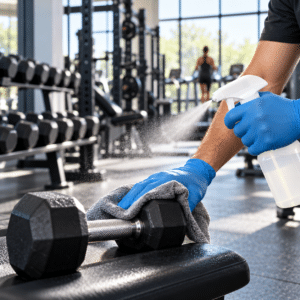
Weight equipment, cardio-machine touchpoints, training surfaces, benches, mats, and other suitable hard surfaces can require regular attention based on usage and the product label.
Clear Gear has dedicated information for gyms and fitness centers as well as schools and athletic programs with sanitation needs that extend beyond a single piece of equipment.
For a more specific discussion of sports equipment, see how disinfecting spray can support cleaner shared sports equipment.
Locker Rooms and Common Areas
Locker rooms, changing areas, training spaces, and other shared environments can combine high traffic, moisture, equipment storage, and repeated surface contact.
These spaces benefit from a routine that identifies which surfaces require treatment, how frequently they should be addressed, and which product is appropriate for each application.
The important distinction is that the product label – not convenience – should determine where and how a sanitizing or disinfecting product is used.
How to Use Sanitizing Spray in a Shared Facility
A good facility sanitation routine should be simple enough to follow consistently.
Complicated procedures tend to break down during busy periods. A repeatable process gives staff a clearer standard and makes it easier to identify when supplies or procedures need attention.
1. Identify the Most Frequently Used Areas
Start with the surfaces and equipment that receive the most contact during a normal day.
High-use areas will vary by facility. A gym may prioritize equipment handles, benches, mats, and locker-room surfaces. A school may need to focus on athletic areas, shared equipment, common spaces, and frequently touched fixtures.
Usage should determine priority.
2. Remove Visible Dirt Before Disinfecting When Required
Cleaning and disinfecting are related, but they are not always the same process.
If a surface has visible dirt, sweat, debris, or other buildup, follow the product label and facility cleaning procedures before applying a disinfectant.
Applying more product over a visibly dirty surface is not a substitute for proper cleaning.
3. Apply the Product According to the Label
This is the part that should never be improvised.
Use the amount directed by the manufacturer, apply the product only to approved surfaces, and follow any required wet-contact time before wiping or allowing the surface to air dry.
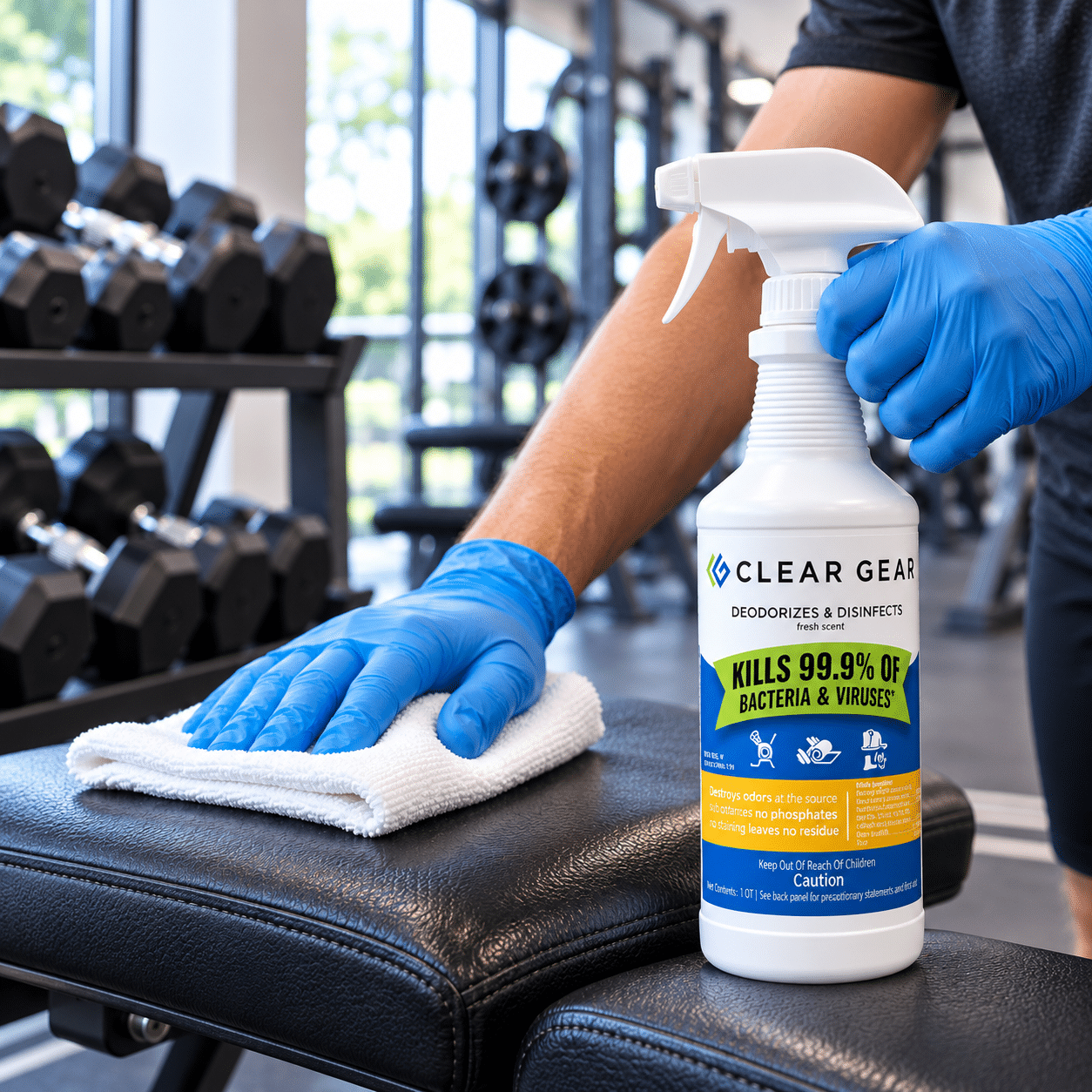
Clear Gear’s 16oz disinfectant spray, for example, provides application directions for users who need a practical spray format for individual areas or equipment.
4. Allow the Required Contact Time
Spraying a surface and immediately wiping it dry may not satisfy the directions for a disinfecting product.
The surface may need to remain visibly wet for a specified amount of time.
Always follow the product label for the required contact time and complete directions for use.
5. Make the Process Repeatable
The best sanitation routine is not necessarily the most complicated one.
It is the one staff can repeat correctly throughout the day.
Facilities can improve consistency by:
- Identifying priority cleaning zones
- Keeping approved products accessible to authorized staff
- Establishing regular inspection or cleaning intervals
- Monitoring high-use areas more frequently
- Keeping adequate refill supplies available
- Training staff to follow product label directions
Choosing the Right Sanitizing Spray for Shared Facilities
Not every cleaning or disinfecting product is appropriate for every surface.
Facilities should evaluate the product itself rather than relying only on generic terms such as “cleaner,” “sanitizer,” or “disinfectant.”
Important considerations include:
- What surfaces the product is approved for
- Whether the product is appropriate for the facility’s intended use
- Required contact time
- Application instructions
- Storage and handling requirements
- Whether staff can realistically use the product as directed
For larger operations, container size and refill logistics can also matter. A facility treating multiple rooms, training areas, or large volumes of equipment may require a different supply setup than a small studio or office.
Clear Gear offers multiple sizes, including larger-volume options such as its 5-gallon disinfectant bucket for facilities with higher-volume sanitation needs.
Why Facility-Wide Sanitation Should Be Based on Use, Not Appearance
One of the easiest mistakes to make is using visible dirt as the only trigger for cleaning.
Shared surfaces can experience significant contact long before they look dirty.
A bench may look clean after multiple users. A door handle can appear unchanged after being touched all day. Exercise equipment may show no visible buildup even after repeated use.
That is why facility sanitation works better when it is based on traffic, frequency of use, and established procedures rather than appearance alone.
This approach also helps prevent staff from concentrating only on the most obvious areas while overlooking surfaces that are touched just as often.
Building a Better Sanitizing Routine for Gyms, Schools and Athletic Facilities
Different facilities require different cleaning schedules, but the underlying process is similar.
First, identify how people move through the environment.
Then identify which surfaces and equipment receive the most contact.
Assign the appropriate cleaning or disinfecting product to each task and establish when those tasks should occur.
For gyms and fitness centers, that may mean more frequent attention to shared equipment and workout surfaces. Schools may need procedures that account for classrooms, athletic areas, locker rooms, and common spaces. Athletic facilities may need additional attention when multiple teams or groups use the same equipment throughout the day.
The objective is not to make facility sanitation complicated.
It is to make it predictable.
When everyone responsible for cleaning knows what needs to be treated, which product to use, and when the task should happen, sanitation becomes part of normal operations rather than a reaction to a visible problem.
Frequently Asked Questions About Sanitizing Spray for Shared Facilities
What is a sanitizing spray for shared facilities used for?
A sanitizing or disinfecting spray can be incorporated into routine treatment of appropriate shared surfaces and equipment in gyms, schools, athletic facilities, workplaces, and other high-traffic environments. Always use the product according to its label directions.
How often should shared surfaces be treated?
There is no single schedule that applies to every facility. Frequency should reflect the amount of traffic, how often equipment or surfaces are shared, facility procedures, and the directions provided with the cleaning or disinfecting product.
Can the same spray be used on every surface?
No. Product compatibility varies. Always check the label for approved surfaces, application instructions, precautions, and required contact time before use.
Should a surface be cleaned before using disinfecting spray?
If visible dirt, debris, or other buildup is present, follow the product label and facility procedures for any required pre-cleaning. A disinfectant should be used according to its labeled directions rather than applied as a substitute for removing visible soil.
Where can Clear Gear be used in a shared facility?
Clear Gear is designed for sanitation applications in environments such as gyms, schools, athletic facilities, locker rooms, workplaces, and other shared spaces. Always refer to the specific Clear Gear product label for approved surfaces and complete directions for use. The EPA recommends following disinfectant label directions carefully, including approved surfaces, application methods and required contact time.
Make Facility Sanitation Easier to Maintain
A successful sanitation program does not depend on constantly adding more cleaning tasks.
It depends on identifying the areas that matter most and treating them consistently.
A sanitizing spray for shared facilities can help support that process when it is matched to the correct surfaces, used according to its label, and incorporated into a repeatable cleaning routine.
Clear Gear provides disinfecting and sanitation solutions for organizations that need practical ways to maintain high-use equipment and shared environments.
Explore Clear Gear disinfecting and sanitizing products to find the format that fits your facility’s cleaning routine.