
How to Clean Hockey Gear (The Right Way, After Every Game)
Every hockey parent knows the smell. You have probably laughed about it, complained about it, or banned the bag from certain rooms in your house. What most parents do not know is that the smell is a symptom — and what is causing it is a lot more serious than sweat.
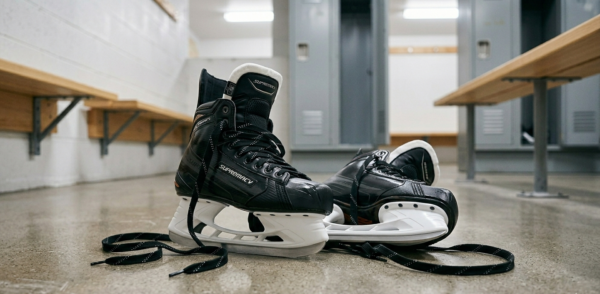
The Gear That Never Fully Dries
A full set of hockey equipment — helmet, shoulder pads, gloves, shin guards, skates — absorbs sweat during every shift and then gets packed into a sealed bag before it has any chance to dry out.
By the time your athlete gets home, the inside of that bag has been warm and wet for hours. That is not just uncomfortable. That is the exact condition bacteria and fungus need to establish themselves in foam and fabric.
The equipment itself makes the problem worse. Dense foam padding holds moisture deep inside where air cannot reach. Hard plastic shells trap heat. Skate liners are in direct contact with bare skin for hours at a time. Most of the gear that touches your athlete’s body the most is also the hardest to actually clean.
What’s Actually Growing in There: The Part Most Hockey Parents Skip
Staphylococcus aureus (Staph) — one of the most common skin infections in contact sports. Thrives in helmet adding and glove interiors. Enters through small cuts, skin abrasions, and open acne.
MRSA (Methicillin-resistant Staphylococcus aureus) — the drug-resistant strain of Staph, documented in hockey locker rooms across North America. Spreads through shared surfaces and contaminated equipment. Standard antibiotics do not work on it.
Tinea pedis (Athlete’s Foot) — a fungal infection that lives inside skate liners and spreads to the feet with every session. Persistent, itchy, and easily passed to teammates through locker room floors.
Candida — a yeast-based fungal infection that grows in warm, dark, wet environments — exactly what the inside of a hockey glove or shin guard becomes after a practice.
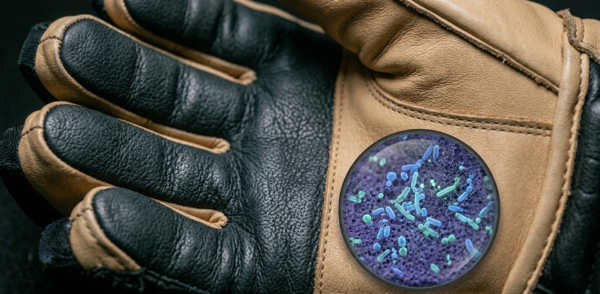
Why the Garage and a Fan Are Not Getting the Job Done
Laying gear out to dry overnight is better than leaving it in the bag. But it only solves one part of the problem.
Airflow removes surface moisture. It does not reach the bacteria already embedded in dense foam padding, and it does nothing for the fungal spores sitting in the liner of a skate that has been worn for two hours straight.
A lot of parents try the washing machine for softer pieces and walk away thinking the problem is solved. Detergent is not built to disinfect — it cleans visible dirt and odor, but it does not eliminate the microbial layer living inside the material. For foam-padded equipment, the machine also causes real damage: cracked liners, warped padding, broken protective plates that your athlete is now counting on for impact protection.
What Clear Gear Does Differently
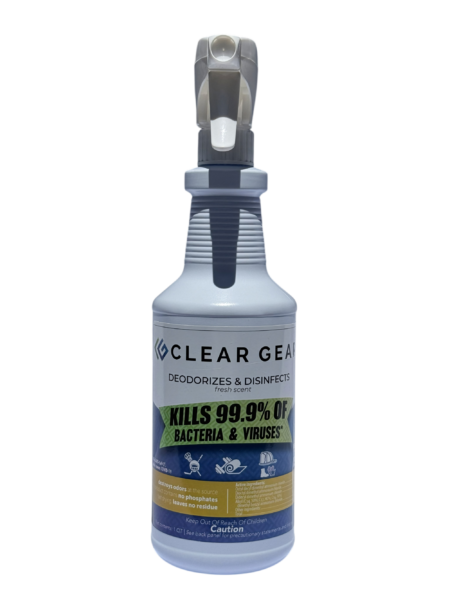
Clear Gear is an EPA-registered disinfectant spray formulated for exactly this kind of equipment. It penetrates foam and fabric, kills bacteria and fungal spores at the source, and dries without leaving residue or damaging any surface it touches.
It was built for professional sports teams. It works just as well on your athlete’s gear after a Tuesday night practice
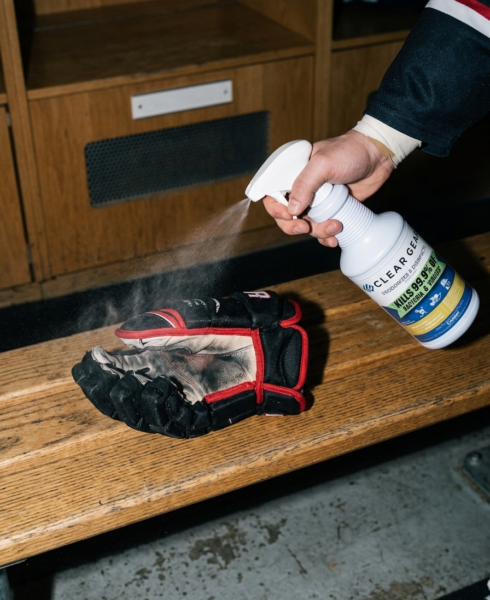
How to Clean Hockey Gear After Every Session
- Pull everything out of the bag the moment you get home. Do not let gear sit sealed.
- Spray Clear Gear on all foam-padded surfaces — shin guards, shoulder pads, elbow pads, and the inside of the helmet.
- Spray directly into both gloves, squeeze to push the product into the palm padding, and let them sit open.
- Spray the inside liner of both skates. This is the highest-contact surface on the ice and the most commonly skipped.
- Let everything dry fully in open air before it goes back in the bag.
- Spray the inside of the bag once a week. It carries contamination from every piece of equipment stored in it.
Frequently Asked Questions
1. How often does hockey gear actually need to be cleaned?
After every use. Bacteria multiplies fast in wet foam — skipping even one session gives it time to establish.
2. My kid’s gear doesn’t smell that bad yet. Does it still need to be cleaned?
Yes. Odor is a late sign. Bacteria and fungal colonies are present long before the smell becomes noticeable.
3. Will Clear Gear damage the foam or plastic in the equipment?
No. Clear Gear is safe on foam, fabric, and hard plastic. It will not crack liners or degrade padding.
4. What about the skates specifically — how do I treat those?
Spray directly into the liner after every skate. Pull the tongue forward to get full coverage inside. Let them dry with the tongue open before storing.
5. Where can I get Clear Gear?
Clear Gear is available at cleargear.com.
Your athlete works too hard and your investment in their equipment is too significant to let bacteria win. Clean the gear. Protect the athlete. Keep them on the ice.


