
Why Your Gym Mats Still Smell After Cleaning (And What’s Actually Living Inside Them)
Walk into any busy gym after a long day of classes and you can usually smell the mats before you even step onto them. Most gym owners assume it is just sweat. Members assume it comes with the territory. But that lingering smell is not the real problem. It is the warning sign.
What is trapped inside gym mats after repeated use is exactly what bacteria and fungus need to multiply fast: heat, moisture, skin cells, and constant human contact.
And if your cleaning routine only focuses on making the room smell better, you are probably leaving the real contamination behind.
Gym Mats Absorb More Than Most People Realize
Whether it is a martial arts studio, CrossFit gym, wrestling room, or fitness facility, gym mats take constant abuse every single day.
Sweat soaks into textured surfaces and seams. Shoes drag bacteria across the floor. Bare skin presses directly against the material during stretching, rolling, drills, and floor work. Add poor ventilation and back-to-back classes, and the surface rarely has enough time to fully dry before the next session begins.
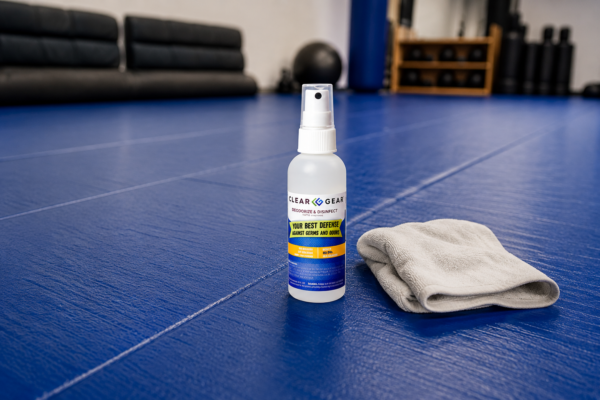
That moisture does not just sit on top.
Over time, bacteria settles into tiny grooves, porous textures, and microscopic surface imperfections where basic wiping cannot reach. Once that happens, odor becomes permanent and contamination starts building layer after layer.
What Could Actually Be Growing on Gym Mats
This is the part most facility owners do not think about enough.
Shared workout surfaces are one of the easiest ways for infections to spread between athletes, members, and students.
Some of the most common pathogens found on improperly disinfected gym mats include:
Staphylococcus aureus (Staph) – commonly spread through skin contact and capable of entering small cuts, turf burns, or abrasions during training.
MRSA – the antibiotic-resistant strain of Staph that has caused documented outbreaks in wrestling rooms, training facilities, and locker rooms across North America.
Ringworm (Tinea corporis) – a fungal infection that spreads rapidly through direct contact with contaminated mats and shared surfaces.
Athlete’s Foot Fungus – commonly transferred in training spaces where athletes train barefoot or in close-contact environments.
!. coli and other bacteria –often introduced through shoes, hands, sweat, and high-touch traffic throughout the day.
The difficult part is that contamination is not always visible. A mat can look clean and still carry bacteria across the entire surface.
Why Basic Cleaning Is Not Enough
A lot of gyms rely on quick wipe-downs between classes. Some use household cleaners. Others spray deodorizing products that temporarily mask odors without addressing the bacteria causing them.
That is where the problem starts.
Traditional cleaners are often designed to remove visible dirt, not disinfect athletic training surfaces exposed to constant sweat and skin contact. Air drying alone only removes moisture from the surface. It does not eliminate bacteria already settled into the material.
Even worse, some harsh chemical cleaners contain bleach or alcohol levels that can slowly damage mat surfaces over time, causing cracking, fading, and material breakdown.
The result is a gym that smells “clean” for an hour while bacteria continue multiplying underneath.
Why a Proper Disinfecting Spray Matters
A professional-grade Disinfecting Spray is designed to do more than cover odors. It targets the bacteria, fungi, and viruses responsible for contamination in the first place.
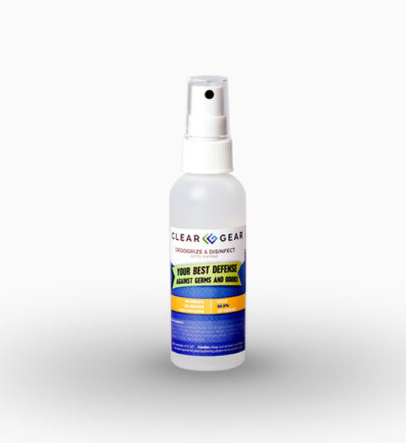
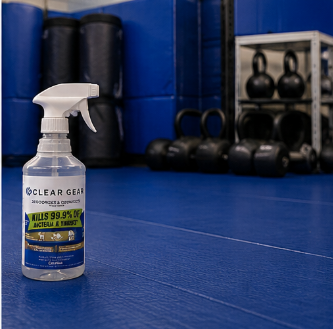
Products like Clear Gear are specifically formulated for athletic environments where shared surfaces, sweat, and repeated contact create constant hygiene risks. The formula is EPA-registered, non-corrosive, and safe for repeated use on hard non-porous surfaces without damaging the material. Instead of masking odor, it eliminates odor-causing bacteria at the source.
That matters in facilities where cleanliness directly impacts:
- member confidence
- athlete safety
- staff hygiene
- facility reputation
- infection prevention
Because once members start associating your gym with bad odor or dirty equipment, it becomes difficult to change that perception.
How to Properly Disinfect Gym Mats
A consistent cleaning routine makes a major difference. Here is the right way to handle gym mats after heavy use:
Remove visible debris first
Dust, dirt, and loose particles should always be cleared before disinfecting.
Apply disinfecting spray evenly across the surface
Do not just spray high-contact spots. Cover the full mat surface, especially training zones with direct skin contact.
Allow proper contact time
The disinfectant needs time to actually kill bacteria and fungi effectively. Spraying and instantly wiping defeats the purpose.
Let the mats fully air dry
Moisture trapped between sessions creates the exact environment bacteria want.
Disinfect between classes whenever possible
High-traffic gyms should disinfect mats multiple times throughout the day, not just once at closing.
Do not forget the surrounding surfaces
Wall pads, storage racks, training bags, and shared equipment all contribute to cross-contamination.
Frequently Asked Questions
- How often should gym mats be disinfected?
High-traffic gym mats should be disinfected daily at a minimum, and ideally between classes in close-contact training environments.
- Does disinfecting spray help remove gym odors?
Yes. A proper disinfecting spray eliminates the odor-causing bacteria instead of simply covering the smell.
- Can harsh cleaners damage gym mats?
Yes. Bleach-heavy or corrosive cleaners can break down mat surfaces over time and cause cracking or discoloration.
- Is Clear Gear safe for fitness facilities?
Yes. Clear Gear is designed for repeated use on athletic equipment and hard non-porous surfaces without damaging materials.
- Why do mats still smell after being cleaned?
Because many cleaners only remove surface dirt or temporarily mask odor without killing the bacteria trapped in the material.
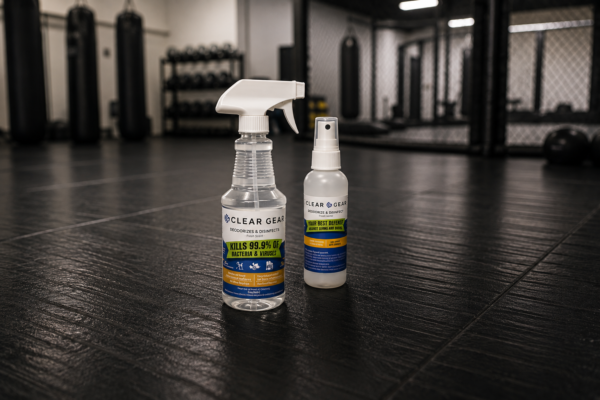
Your members trust your facility every time they step onto the mat. Keeping those surfaces properly disinfected is not just about cleanliness. It is about protecting the people training on them every single day.


