
Why More Athletic Facilities Are Keeping Sanitizer Bottles Everywhere
A few years ago, most teams kept one sanitizer bottle somewhere near the front desk and called it good enough. Now they are everywhere. Next to the bench. Beside the water cooler. Inside equipment bags. Near training mats. At check-in counters. In coaches’ offices. On team buses.
That shift did not happen because sports suddenly became less physical. It happened because athletes, parents, and facilities started paying closer attention to how quickly bacteria move through shared environments. And once you notice it, you cannot really unsee it.
The Real Problem Is Constant Surface Contact
A normal practice involves nonstop contact. Athletes wipe sweat from their faces, grab a shared water cooler handle, adjust equipment, check their phones, tap teammates on the shoulder, and move through locker rooms packed with damp gear and shared surfaces.
Most of it happens automatically. The issue is not one dirty object. It is how many touchpoints exist in a single hour.
Locker rooms and athletic facilities create ideal conditions for bacteria because everything people need for transfer is already there: heat, moisture, skin contact, shared equipment, and constant movement. That is why bacteria like Staph and MRSA have repeatedly been linked to sports environments over the years.
The Surfaces Nobody Thinks About
What makes the problem difficult is that contamination rarely looks dramatic. The dirtiest surfaces in a facility are often the ones nobody thinks twice about.
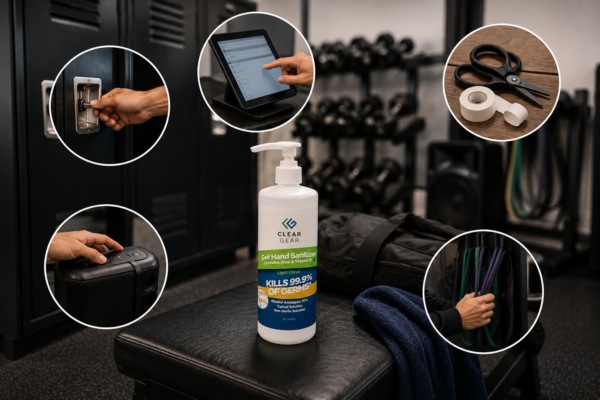
- The locker handle everyone grabs before practice
- The tablet used for team check-ins
- The tape scissors sitting on the bench
- The speaker someone touches between drills
- The shared resistance bands passed around training groups
Nothing looks dirty. That is exactly why bacteria spreads so easily.
Most athletes do not sanitize until after something feels contaminated. But by then, the transfer has usually already happened. One contaminated hand touches a surface, another athlete picks it up minutes later, and the cycle keeps moving quietly through the room.
Why Accessibility Matters More Than Reminders
Facilities often assume people forget to sanitize because they are careless. Usually, it is simpler than that. People sanitize when it is convenient.
A sanitizer bottle hidden near the restroom will get far less use than one sitting directly beside the team bench or water station. The easier it is to reach, the more naturally it becomes part of the routine.
That is especially important during:
- practices
- tournaments
- team travel
- strength training sessions
- shared recovery sessions
These environments create constant surface contact without much downtime in between.
Travel Sports Changed the Conversation
Travel tournaments made many parents rethink hygiene completely. Over a single weekend, athletes move through:
- hotels
- buses
- gas stations
- tournament venues
- restaurant tables
- crowded locker rooms
One player gets sick, and suddenly the entire team is dealing with it days later. That is why sanitizer bottles now sit in equipment bags alongside tape, snacks, extra socks, and water bottles. Parents are not just thinking about convenience anymore. They are thinking about limiting how much bacteria travels with the team from place to place.
Why Facilities Are Taking Sanitizing More Seriously
Cleanliness has become part of how athletes and parents judge a facility.
- People notice stale-smelling locker rooms.
- They notice dirty benches.
- They notice empty sanitizer stations.
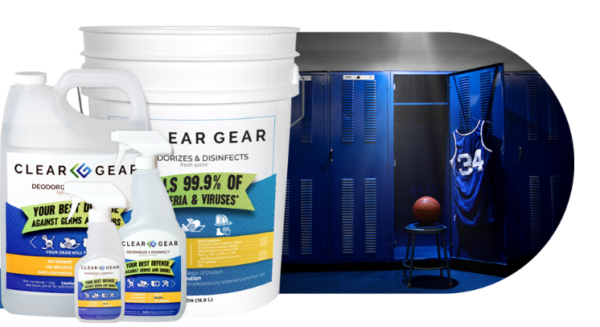
Visible hygiene now affects trust. Facilities are expected to do more than clean once at the end of the night. Athletes want to see sanitation built into the environment throughout the day. Clear Gear offers sanitizer bottles and refill solutions designed for athletic facilities, gyms, schools, and shared environments where repeated daily sanitation is part of normal operations.
Frequently Asked Questions
- Why are sanitizer bottles important in athletic facilities?
Athletes constantly touch shared surfaces, equipment, benches, and personal items throughout practices and games, allowing bacteria to spread quickly.
- Where should sanitizer bottles be placed?
Sanitizer bottles work best in high-contact areas like benches, entrances, locker rooms, training zones, and near shared equipment.
- Do sanitizer bottles help during travel tournaments?
Yes. Travel sports involve repeated contact with public surfaces, shared transportation, hotels, and crowded athletic venues.
- Why do sports environments spread bacteria so easily?
Heat, sweat, shared surfaces, and repeated physical contact create ideal conditions for bacteria transfer between athletes.
- Does Clear Gear offer sanitizer solutions for teams and facilities?
Yes. Clear Gear provides portable sanitizer bottles and larger refill systems designed for high-contact athletic and commercial environments. (cleargear.com)
In sports, everyone notices the obvious things first: the noise, the sweat, the intensity, the equipment. But the things that spread through a team the fastest are usually the things nobody can see at all.


